



Post-harvest crop residues directly affect preparation for the next growing season. Therefore, farmers carefully manage corn, sunflower, cotton, and cereal stalks.
According to FAO research on crop residue management, proper practices can support soil organic matter. Moreover, effective residue management can improve surface protection and soil water management.
Farmers use flail mowers during this process. As a result, they prepare fields more effectively for later tillage and planting operations.
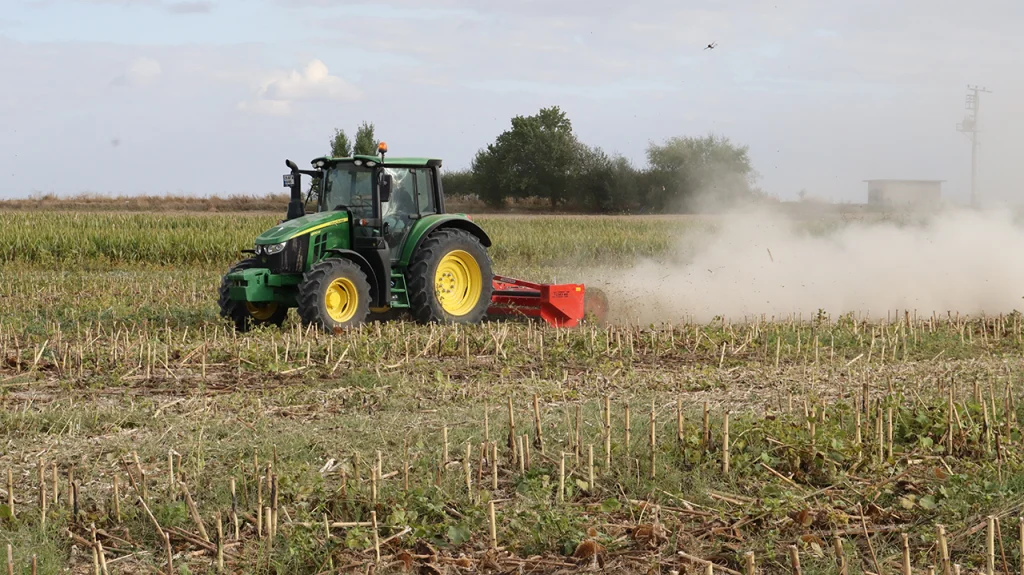
What Does a Flail Mower Offer After Harvest?
A flail mower cuts post-harvest stalks and crop residues into smaller pieces. Therefore, farmers can manage dense plant residues more effectively.
Smaller residues simplify later soil tillage operations. Moreover, farmers can reduce uneven stalk accumulation and prepare the field surface more systematically.
Proper shredding also helps producers plan later field operations more efficiently. Therefore, post-harvest flail mowing forms an important stage of the production cycle.
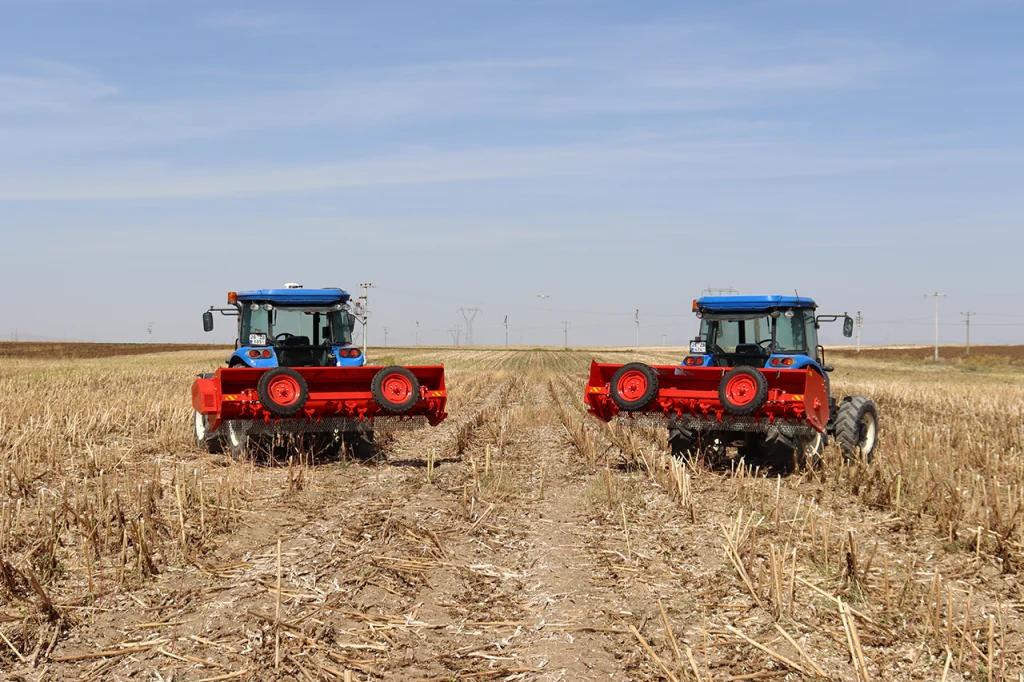
Choosing the Right Machine for Corn, Sunflower, and Cotton Residues
Each crop leaves different amounts and types of residue after harvest. Corn and sunflower crops often leave thick and durable stalks.
Therefore, producers need machines with strong rotors and durable blades. Toscano Heavy-Duty Flail Mower models offer several blade configurations.
Y-shaped blades effectively shred corn, sunflower, and cereal stalks. Hammer blades provide stronger shredding performance for thicker crop residues.
Therefore, farmers should evaluate crop type, residue density, and field conditions together. This evaluation helps producers choose a more suitable machine.
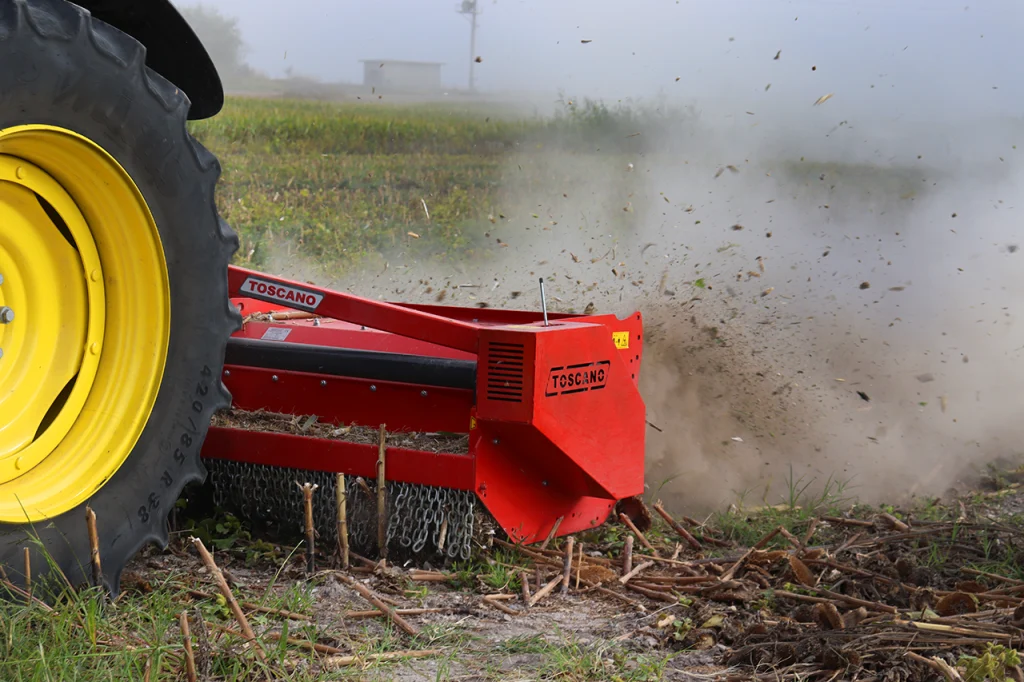
Why Does Working Width Matter on Large Fields?
Large fields require producers to pay greater attention to working width. A suitable working width can reduce the number of field passes.
However, farmers should also match tractor power with the machine’s technical requirements. Proper matching helps use tractor and implement power more efficiently.
Toscano offers heavy-duty flail mower models with different working widths. Moreover, folding flail mower options provide additional solutions for large fields.
Therefore, farmers should consider tractor power, field size, and working width together. As a result, producers can manage post-harvest operations more efficiently.
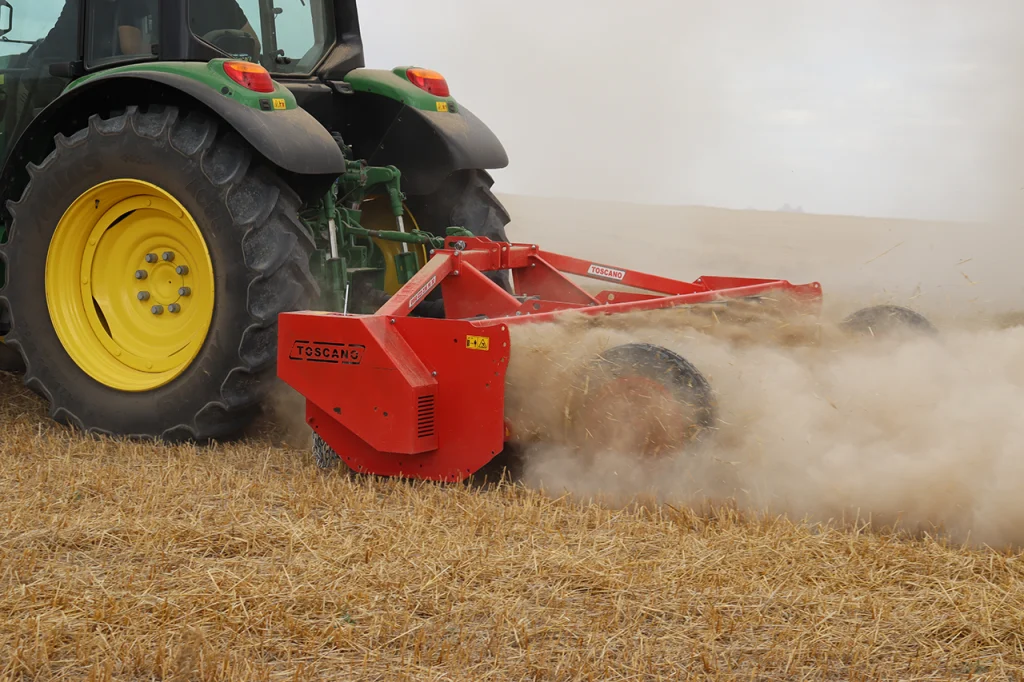
How Do Crop Residues Support Soil Management?
Farmers should not view post-harvest crop residues only as agricultural waste. Proper residue management supports the contribution of organic material to soil.
Moreover, shredded residues help producers manage later soil tillage operations more effectively. This approach creates a strong link between shredding and soil preparation.
After shredding, farmers can choose soil tillage equipment that suits field requirements. Thus, producers can connect residue management, soil preparation, and planting.
Long-Lasting Use with Toscano Flail Mower Solutions
Toscano offers several flail mower solutions for different field conditions. Producers can choose among standard, heavy-duty, and folding models.
Farmers should evaluate tractor power, working width, and crop residue density together. Moreover, proper blade selection helps producers achieve more effective machine performance.
Regular maintenance helps farmers preserve machine performance over time. Correct PTO operation also supports proper tractor and implement compatibility.
As a result, the right flail mower helps producers manage post-harvest fields more effectively. Thus, farmers can prepare for the next season systematically.